
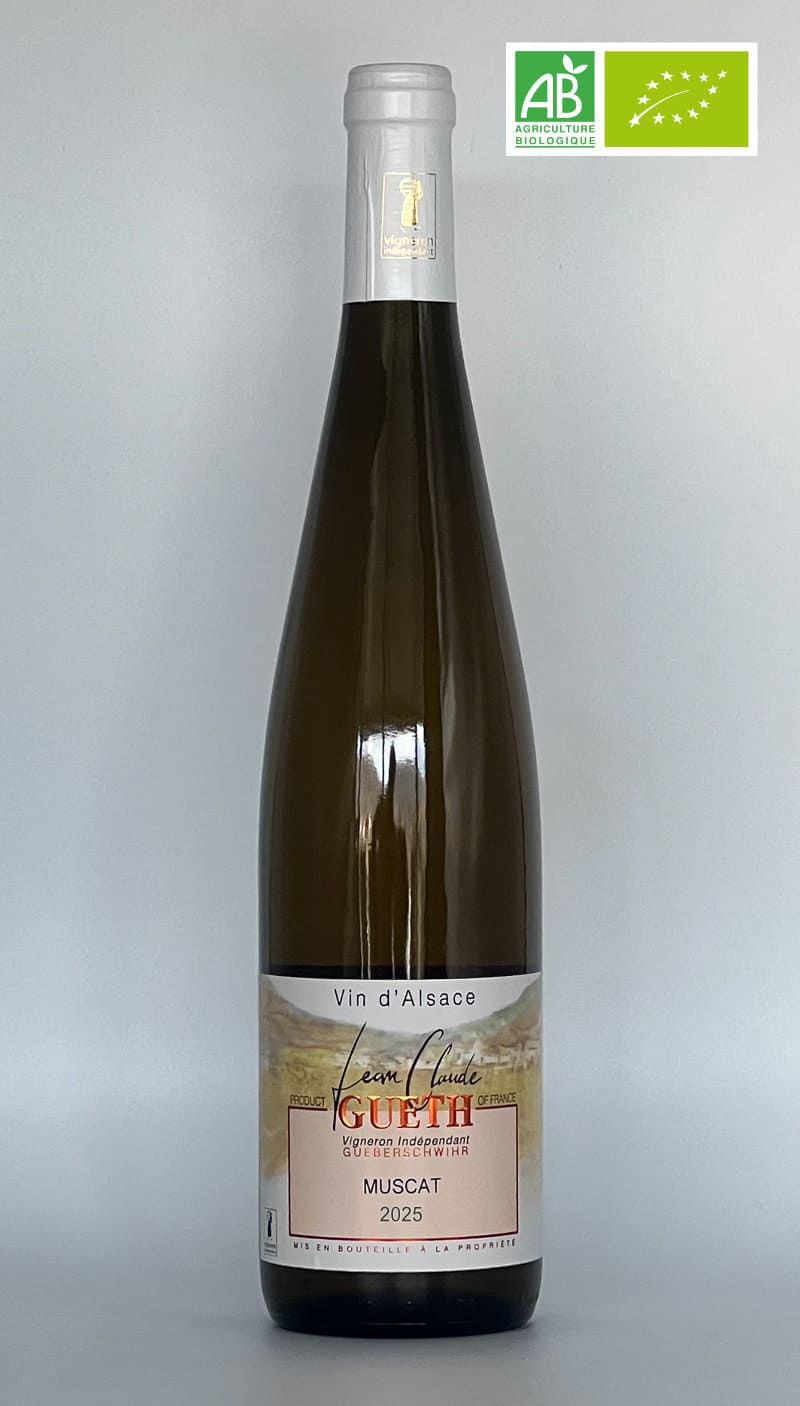


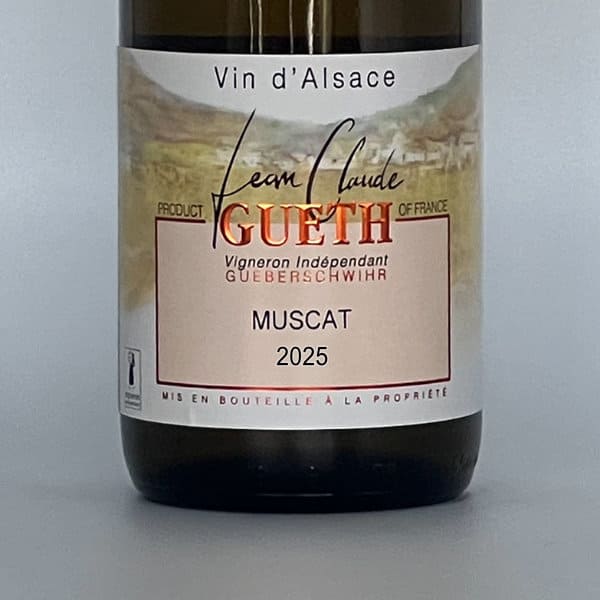


Tasting notes
Nose: Fresh and expressive, with an appealing aroma of fresh grapes, typical of Muscat, accompanied by delicate floral notes.
Palate: Lively and refreshing, revealing crisp fruit flavours and an elegant Muscat character. The dry, aromatic finish leaves a pleasant impression.
Terroir
Our organic Alsace Muscat comes from the « Ranck » vineyard plot, located halfway up the slope south of Gueberschwihr. Its marl and sandstone terroir, with pink Vosges sandstone rocks and deep, clay-rich soil, gives the wine its expressive fruit character.
Winemaking
The grapes are slowly and gently pressed to preserve their aromatic expression. Fermentation takes place without the addition of selected yeasts, followed by a very moderate addition of sulphites. The wine is then aged on fine lees for 6 months in stainless steel tanks. Bottled at the estate, it is kept in reserve so that we can offer it when it has reached its best potential.
What to enjoy with our organic Alsace Muscat?
As an aperitif and with starters:
- Asparagus gazpacho or chilled spring vegetable soup.
- Savoury vegetable tartlets.
- Fresh verrines with crunchy vegetables and bean sprouts.
With fish and seafood:
- Marinated herring and mackerel.
- Grilled or lightly seared tuna.
- Fish and seafood salads.
With vegetables and vegetarian dishes:
- Green or white asparagus served with a light sauce.
- Grilled Mediterranean vegetables or vegetables cooked with olive oil.
- Mixed salads with fresh herbs and crunchy vegetables.
With cheese and fruit-based desserts:
- Fresh or lightly matured goat’s cheese.
- Strawberry and rhubarb salad.
- Fresh fruit verrines with a delicate touch of acidity.
To fully appreciate its dry, aromatic character, choose fresh and light dishes that complement the delicate Muscat aromas without overpowering them.
Serving and storage recommendations
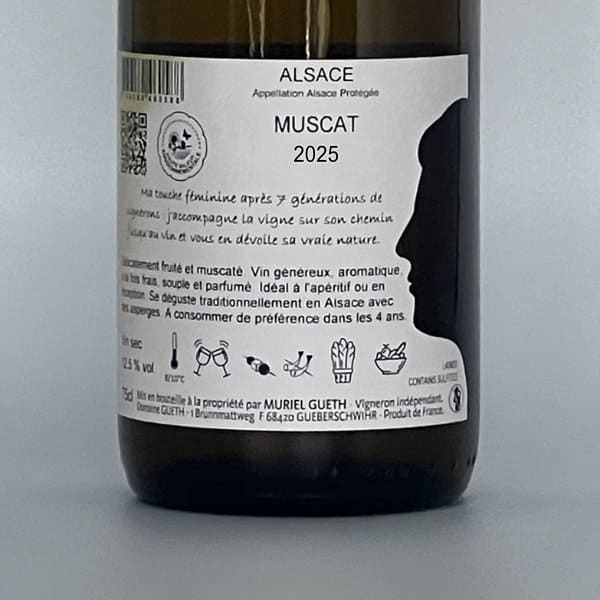
Serving: serve chilled, ideally between 8 and 10°C, to preserve the freshness and aromatic expression of this dry Alsace Muscat.
Storage: store the bottle horizontally, away from light and significant temperature fluctuations.
Cellaring potential: best enjoyed between 2028 and 2031, when it can fully express its balance and aromatic potential.
Technical specifications
| Alcohol % Vol | 11,5 | % |
| Residual sugars (glucose/fructose) | 3,2 | g/L |
| Total acidity (as tartaric acid) | 5,7 | g/L |
| Energy | 66 | kcal/100 mL |
| 277 | kJ/100 mL |


Reviews
There are no reviews yet.